ThinkStock

Tip for Resizing Objects with Text in PowerPoint

Resize the object and the text doesnt adjust with the object

Resize the object and the text doesn't adjust -- how annoying!

When you design icons or graphics in PowerPoint, you may need to incorporate text into them. What happens when you need to resize the object? If you’ve run into this problem before you know that text boxes don’t scale with the object as it is resized, even if the text box is grouped with other objects. You have to fiddle with the font size and positioning, which can be painful if you’re dealing with several objects. More…


Create a Cut-Out Effect in PowerPoint

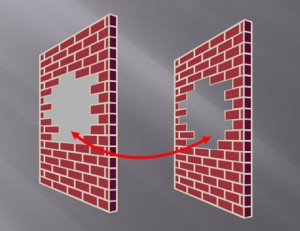
The shape on the right leverages the slide background fill effect to simulate a cut-out effect in the wall.

The shape on the right leverages the slide background fill effect to simulate a cut-out effect in the wall.

If you’ve ever needed to cut out a portion of an object, there’s really no easy way to do it in PowerPoint. You basically have to place another object on top of the object in question and fill it with the same color as the background. When the background is a solid color such as white or black, it isn’t a problem.

However, when your background has some kind of design or gradient, it can be hard to make a good match with the background. Many people may not realize that they have the option to fill a shape with the slide background, which can be used to create a simple cut-out effect. More…


PowerPoint Design Principle #2: Control

Are you in control of your slides? (c) iStockPhoto/Andy Gehrig

Are you in full control of your PowerPoint presentation? (c)iStockPhoto/Andy Gehrig

In a previous article, I covered the first PowerPoint design principle of consistency. In this article, I’d like to explore the principle of control. Many PowerPoint users fail to realize they control many aspects that determine the success or failure of their presentations. Seemingly insignificant decisions in the presentation design stage can come back later to haunt the presenter when the presentation is delivered. For example, choices about what content to include, how to introduce the content, or what “special effects” to use can make or break presentations. More…


How to Create a Sexy Curved Arrow in PowerPoint

When you’re trying to highlight a key part of a chart or table, you may want to use an arrow. It’s fairly easy to create an arrow in PowerPoint 2007, but it is not as obvious how to create an eye-appealing curved arrow. I find that curved arrows are frequently better than straight arrows because they can bend around other important data points in a chart or table rather blocking them. And let’s face it — straight arrows are very boring. More…


PowerPoint Slides: How to Balance Simplicity with Detail

Many presentation experts recommend keeping your PowerPoint slides as simple as possible. How do you balance keeping your slides simple with providing your audience with ample information? On one hand, you don’t want to necessarily pack your business presentation with too much information leading to a death by PowerPoint experience for your audience. On the other hand, you worry about providing insufficient details for them to deeply understand your topic and apply what they learned. I will review four different tactics that you can use to overcome this challenge: More…


Page 2 of 3«123»